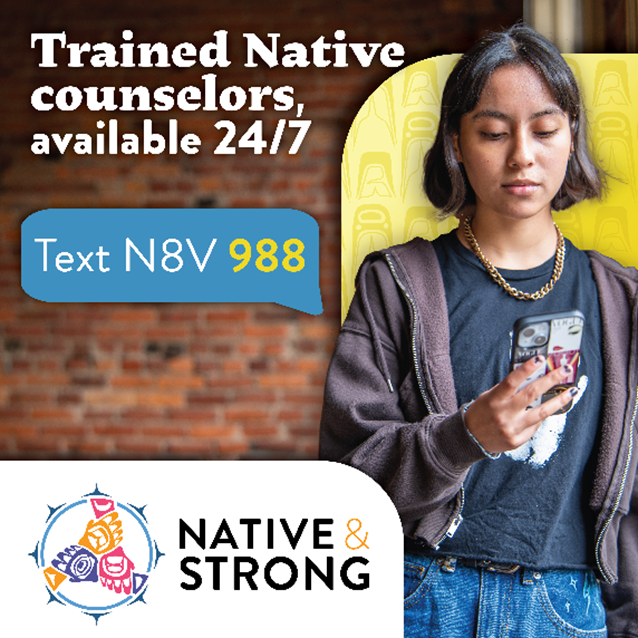
Call 988 and press 4 for the Native and Strong Lifeline, available 24/7.
Your Identity is Sacred
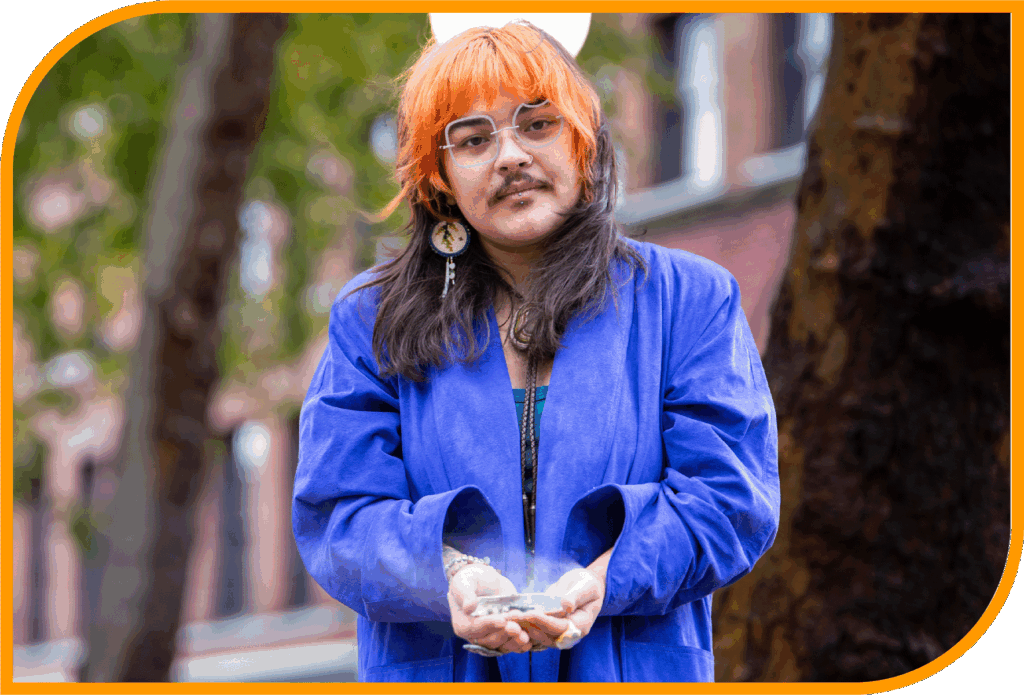
Before colonization, Two-Spirit and LGBTQIA+ people were accepted, supported and honored in most tribes. Many Two-Spirit people held sacred or ceremonial roles such as counselors, healers, pipe carriers or visionaries. Others were great warriors, dreamers, medicine people or spiritual advisors.
Two-Spirit and LGBTQIA+ people have existed far longer than the modern-day, generalized labels. The term “Two-Spirit” reflects hundreds of diverse identities related to gender and sexuality within Indigenous cultures—it’s also a synonym for hundreds of words and phrases used in tribal languages for these identities. And now, Two-Spirit people are reclaiming these identities and reviving these roles.
Two-Spirit individuals know best what being Two-Spirit means to them. Some Two-Spirit people also use the words gay, lesbian, bisexual or trans to describe their sexual orientation or gender—while others, do not. But being Two-Spirit is not the same as being gay or trans—it’s a way of reclaiming Native community roles and reconnecting with traditional values, responsibilities, and life ways that have existed for millennia.Watch this YouTube video, Two-Spirit Identities Explained, to learn more.
Be There for Your Two-Spirit Relatives
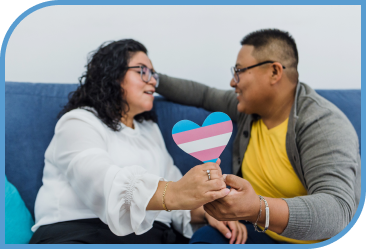
Two-Spirit and LGBTQIA+ people can face discrimination or abuse. Strong and accepting relationships with friends, relatives, tribes and communities help protect them. Being there means listening, learning, and standing up for your 2SLGBTQIA+ relatives.
Listen well and honor their identity.
Two-Spirit people can gain strength by talking with family and community members about their identity in a supportive environment. By feeling comfortable with who they are, they build resilience.
Provide safe spaces that include and respect Two-Spirit identities.
Advocate that schools are safe for gender-diverse and sexually-diverse people. Help make sure health care providers who serve Native people are trained in gender diversity and that 2SLGBTQIA+ people have fair access to safe housing and restrooms.
Learn about Two-Spirit traditions, beliefs and practices.
Engage in positive practices alongside your friend or relative. Learning and educating others about traditional Two-Spiritroles in our cultures helps erase stigma.
Asking for Help is a Sign of Strength—
Connection is Prevention
Native & Strong Lifeline
If you’re thinking about suicide or struggling emotionally or mentally, talk with a friend or relative, or call the Native & Strong Lifeline:
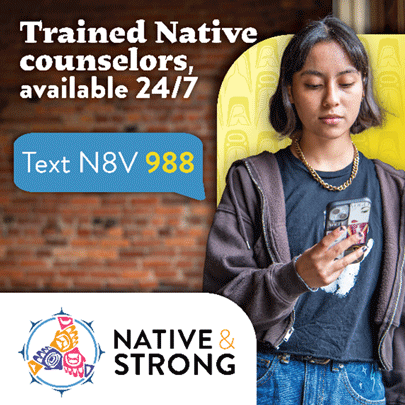
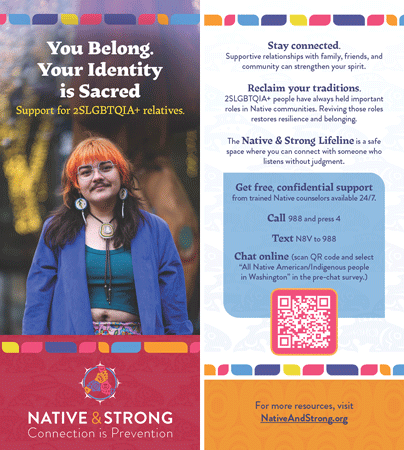
In Washington state, dial 988 and press 4 or text N8V to 988.
Chat the Native & Strong Lifeline. Select the “All Native people in Washington state” box in the pre-chat survey when chatting online.
The Lifeline is open 24/7 and fully staffed by Native counselors.
This Native-centered crisis line is for all Indigenous Peoples in the state of Washington, regardless of tribal affiliation or homeland.
For support specifically for Veterans, you also can call the Veterans Crisis Line: 988, and press 1.
Native Resource Hub
Finding support for houselessness, unemployment, and other hardships can improve your mental health. The Native Resource Hub can help you find housing, food, utility assistance or other resources, including cultural resources.
Dial (866) 491-1683 from 8 a.m. to 5 p.m. Monday through Friday.
The Hub is fully staffed by Native people who keep a database of updated resources within the state of Washington.
The Hub is for all Indigenous people in Washington state, regardless of tribal affiliation or homeland.
Campaign Resources
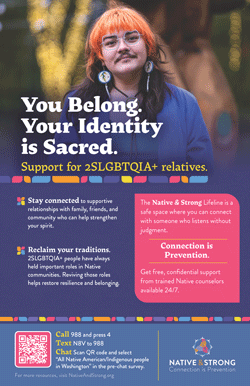
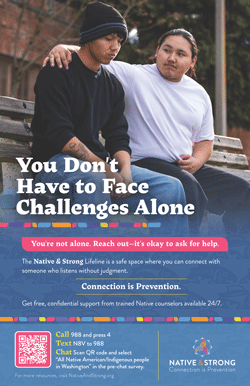
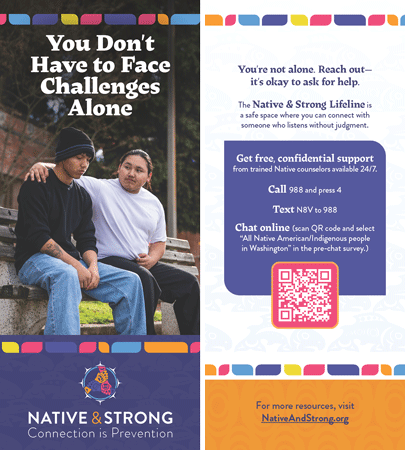
The following assets were developed to help partners and community members across Washington share information about the Native & Strong campaign. Download rack cards, posters, social media graphics, and outreach resources to promote the Native & Strong Lifeline and help connect people to culturally grounded mental health support.
For our 2SLGBTQIA+ relatives, you deserve spaces and conversations where you belong. Call 988 and press 4, text N8V to 988, or chat online at Chat.988LifeLine.org to reach a trained Native counselor. #ConnectionIsPrevention